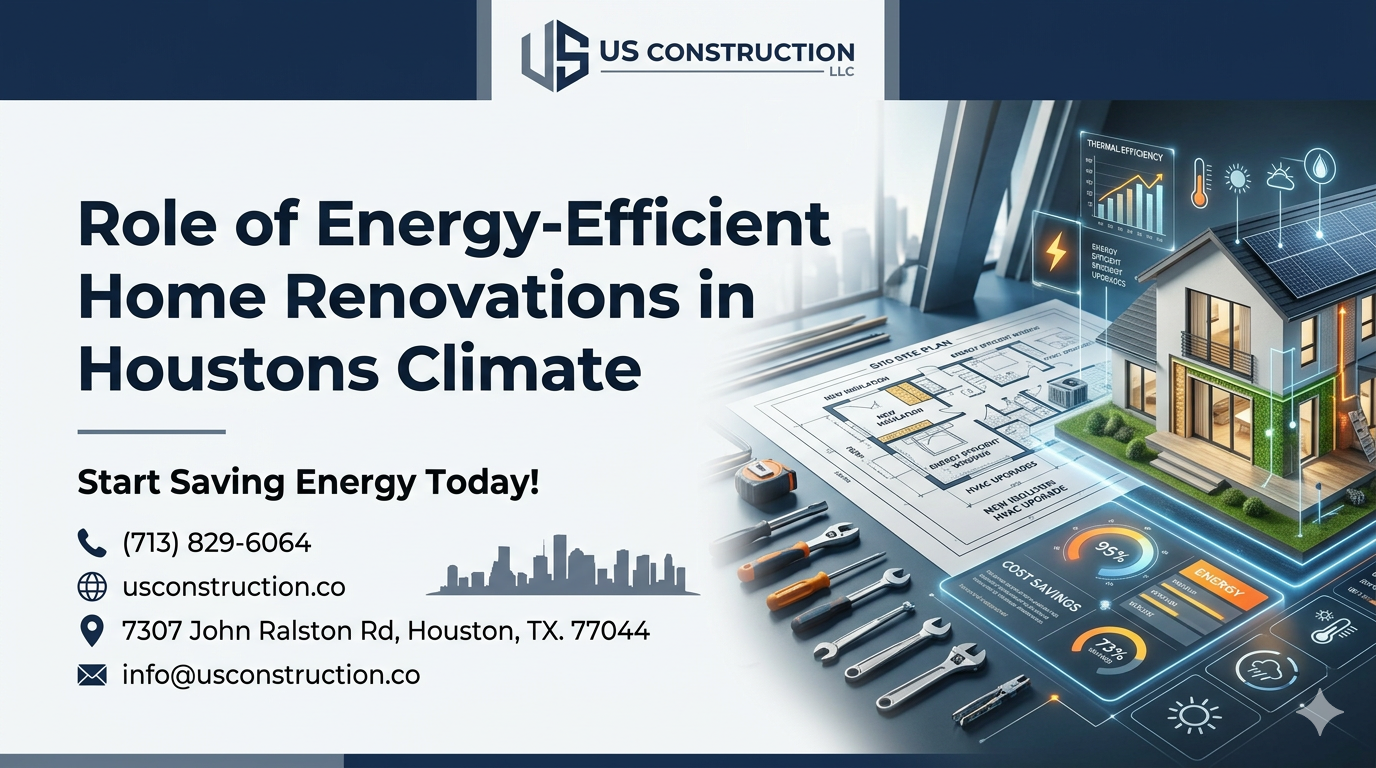
Energy-saving mechanical installations are an optimal way to reduce electricity bills in residential renovations. In high-humidity, intense temperature fluctuations between day and night, the role of energy-efficient home renovations in Houston’s climate is a strategic move. Local contractors upgrade high-capacity HVAC systems, install greener roofing materials, and add reliable insulating sealants to improve indoor air quality.
US Construction LLC, an experienced general contractor, understands the Houston climate and permitting for demolition and remodeling work. Energy-efficient improvements increase property value and enhance functionality factors.
What is Energy-Efficient Home Renovations
Energy-efficient house renovations are capital upgrades intended to strengthen overall building efficiency, minimize utility costs, and reduce energy usage. Energy-efficient renovations are especially important in climate-intensive areas like Houston, where high temperatures, humidity, and long cooling seasons are common. A thorough analysis of the main categories is provided below:
Building Envelope Improvements
The primary barrier between the interior and exterior environments is the building envelope, which comprises the walls, roof, windows, and doors. Thermal transmission is greatly decreased by improving this mechanism.
| a) Insulation Upgrades | • Fiberglass panels, formed cellulose for roof insulation.• Insulation for wall cavities• Roofing systems with shielding radiation. Enhances temperature stability and lowers cooling load. |
| b) High-Performance Windows and Doors | • Glazing with two or three panes• Coatings with low permeability, or Low-E• Units filled with argon or krypton gas• Door seals that use less energy. Reduces airflow and thermal gain. |
| c) Air Sealing | • Filling up spaces around pipes, ducts, and plumbing penetrations• Weather sealing windows and doors. Reduces the need for HVAC systems and reduces leakage of conditioned air. |
HVAC System Modernization
In hot temperatures, the majority of home energy use is attributed to HVAC systems.
| a) High-Efficiency HVAC Units | Air handlers with variable speeds. Air conditioners with a high SEER rating |
| b) Smart Thermostats | Responsive and configurable thermostats adjust the temperature according to occupancy trends. |
| c) Ductwork Optimization | Insulation for ducts. Air conditioning systems that are zoned. Enhances humidity control and minimizes energy waste. |
Roofing and Exterior Upgrades
| a) Cool Roofing Materials | Luminous tiles. Heat-reflective finishes on metal roofing |
| b) Roof Ventilation Systems | Contour vents. Solar-powered attic fans. Reduces the need for cooling and heat accumulation in the attic. |
Energy-Efficient Lighting and Appliances
| a) LED Lighting | LED lighting lasts much longer and consumes up to 75% less power than fluorescent bulbs. |
| b) ENERGY STAR® Appliances | Refrigerators, dishwashers, washers, and dryers with certified energy efficiency use less water and power. A smaller carbon footprint and lower operating expenses. |
Water Efficiency Improvements
Energy consumption is significantly affected by hot water use. Houston residential renovation companies install tankless water heaters with low-flow fixtures. Hot water pipes that are insulated control energy and water costs.
Renewable Energy Integration
| a) Solar Panel Installation | On-site power is produced using solar power systems. |
| b) Battery Storage Systems | Stores extra solar energy for times when it is most needed.Impact: Increases resilience and reduces reliance on the grid. |
Moisture and Humidity Control
Managing moisture is essential for energy efficiency and structural lifespan in humid conditions. Builders install dehumidification systems, vapor barriers, and appropriate drainage systems. Lessens HVAC strain and prevents mold growth.
Long-Term Benefits of Energy-Efficient Renovations
Energy-efficient renovations offer long-term advantages that go well beyond immediate utility savings. Upgrades produce quantifiable financial, structural, and environmental benefits over the long term when properly executed, with an emphasis on building envelope and moisture control. These advantages are enhanced in high-demand regions because of prolonged heating seasons and humidity stress.
Sustained Reduction in Utility Costs
Energy-efficient upgrades lower total energy usage by better air sealing and soundproofing. HVAC systems with high efficiency, energy-starred appliances, and intelligent thermostats.
Over a period of ten to twenty years, lower monthly electricity expenses add up to significant savings. Efficiency improvements serve as a buffer against future utility inflation as energy rates rise.
Increased Property Value
Resale values for homes with proven energy-efficient features are usually greater. Purchasers are prioritizing lower operating expenses, contemporary mechanical systems, and eco-friendly features. Long-term effects include increased appraisal value, quicker sales periods, and a competitive edge in the real estate market.
Enhanced Structural Durability
Renovations that use less energy often address underlying performance problems such as moisture infiltration, inadequate ventilation, and heat expansion and contraction. Long-term material deterioration is reduced by improvements such as vapor barriers, adequate insulation, and sophisticated roofing systems. Long-term effects include lower maintenance costs, longer structure life, and a lower chance of collapse, rot, or mold growth.
Improved Indoor Air Quality (IAQ)
When used with regulated ventilation systems, air sealing reduces the infiltration of contaminants, allergens, and excessive humidity. The quality of the interior atmosphere is improved by modern HVAC systems with improved filtration. Better living conditions, particularly in humid areas with a higher risk of mold.
Greater Thermal Comfort
Consistent interior temperatures are maintained in efficient homes through constant temperatures, equilibrium humidity levels, and reduced HVAC cycle frequency. Long-term effects include increased occupant comfort and reduced system stress, thereby extending the life of the equipment.
Reduced Carbon Footprint
Houston home remodeling experts in Houston, Texas, install greener materials and provide installation. Reducing energy use directly lowers greenhouse gas emissions from power generation.
Supports environmental sustainability objectives and aligns with evolving legal requirements and green construction trends.
Resilience Against Climate Extremes
During severe thunderstorm incidents, energy-efficient dwellings perform better. They have improved insulation, sealed envelopes, and effective cooling systems. Long-term effects include decreased susceptibility to grid outages and increased energy independence.
Lower Lifecycle Maintenance Costs
Over time, high-performance materials such as reflective roofs, sophisticated windows, and contemporary HVAC systems require less maintenance and fewer replacements. Long-term effects include a lower total cost of ownership (TCO) over the building’s life.
Houston Home Renovation Contractor Near Me
For Houston homeowners looking to reduce utility expenses, increase comfort, and improve future marketability, a contact with a Houston renovation expert is a wise investment. You can maximize efficiency throughout the year while protecting your house by incorporating climate-responsive architecture and high-performance materials.
Are you prepared to update your house to withstand Houston’s harsh weather? Call (713) 829-6064 or visit www.usconstruction to reach US Construction LLC. Make an appointment for your consultation to begin building a more intelligent, energy-efficient house.